Over the past few months, I have been building a family of AI-powered apps.
It started with a simple question:
Why does AI always have to be about productivity?
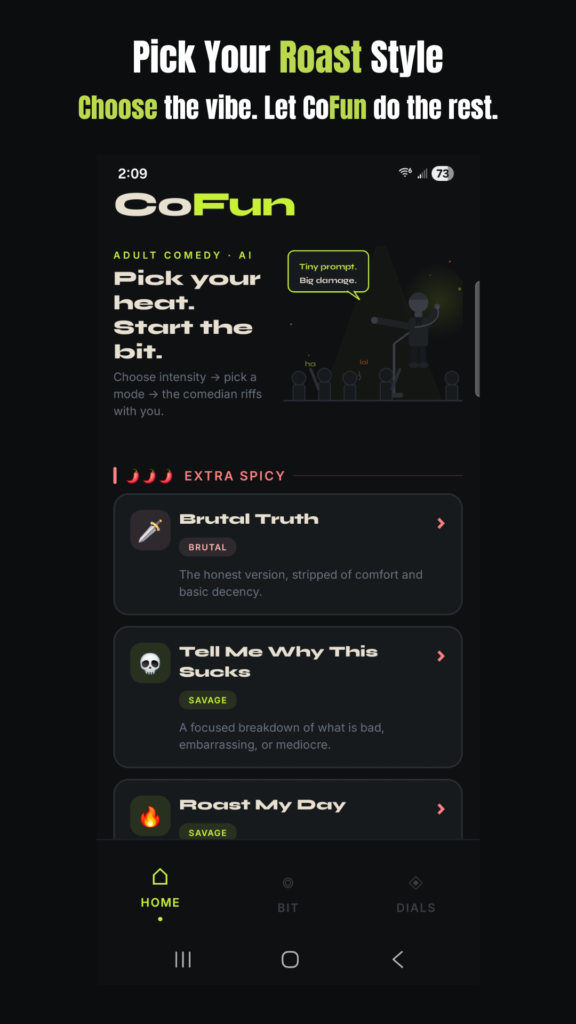
So I built CoFun.
CoFun began as a creative experiment: an app that helps people turn everyday frustrations, awkward moments, arguments, and random life nonsense into comedy roasts, bits, and laugh-out-loud responses. It was not supposed to be a corporate tool. It was supposed to be fun.
And that was the point.
Because sometimes the most human use of AI is not automation.
Sometimes it is laughter.
Sometimes it is taking a ridiculous moment from your day and turning it into something you can share with your wife, your friends, or your followers. Sometimes AI is not replacing creativity. It is giving you a spark.
From there, the idea grew.
I began developing other apps in the same creative ecosystem:
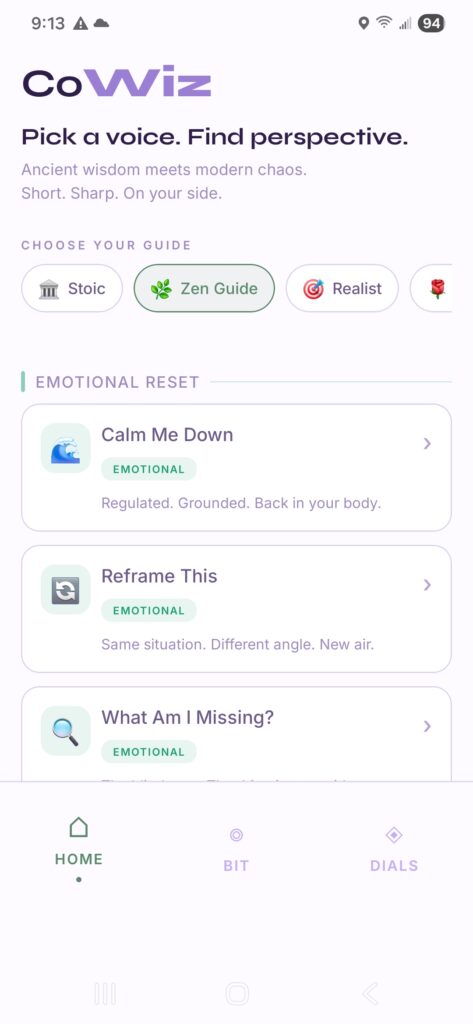
CoWiz — a wisdom and reflection app designed to help people think more clearly through life questions.
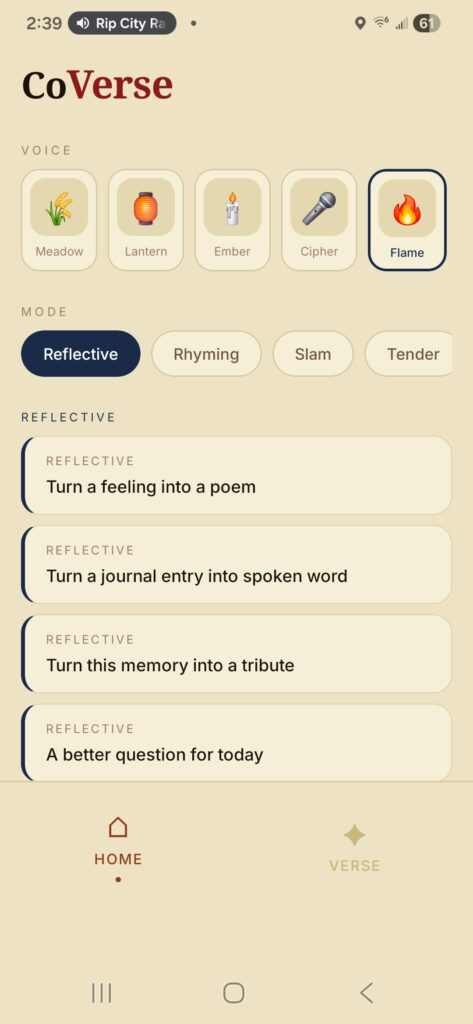
CoVerse — a poetry and spoken-word app for people who have something real inside them but need help getting it out.
CoSong — a songwriting and lyric-generation app for turning thoughts, stories, and emotions into musical ideas.
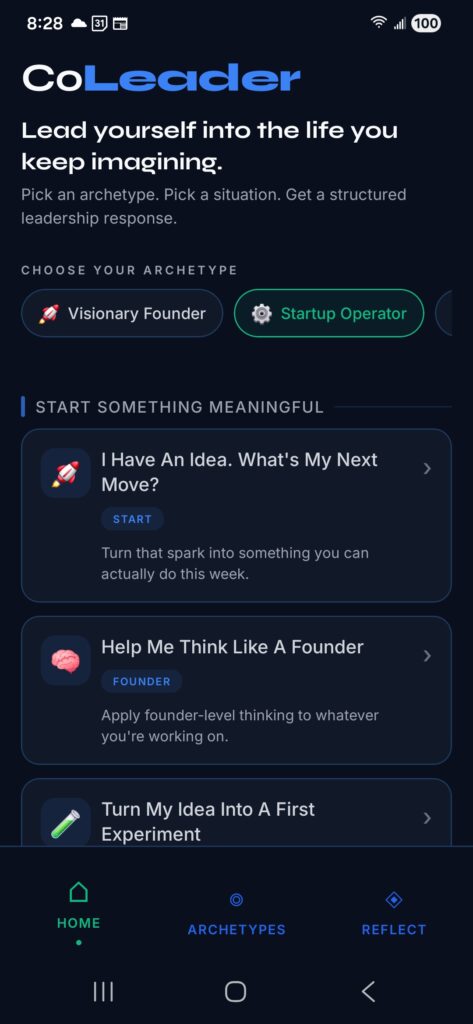
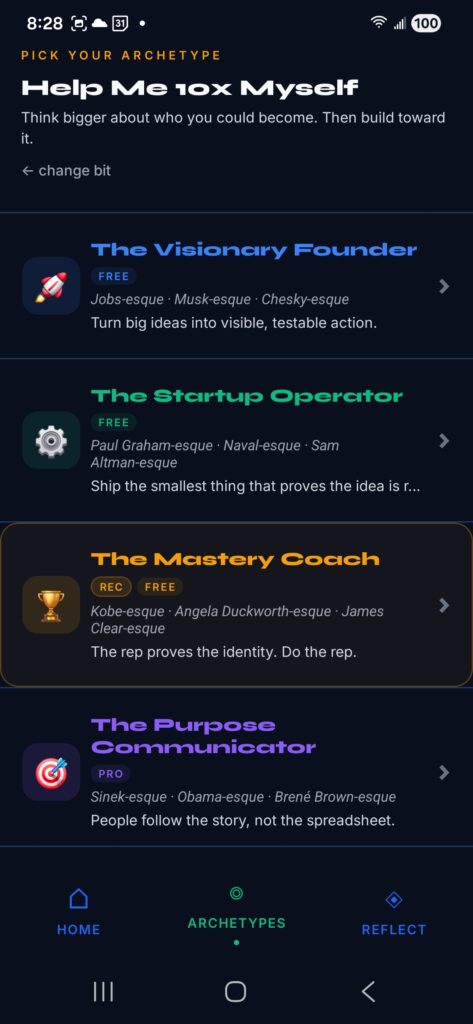
CoLeader — a personal growth and leadership companion for people building confidence, discipline, and momentum.
Each app has a different personality, but they all share the same underlying belief:
AI should not replace the human voice. It should help people find it.
That belief is now leading me to my next major project.
The Next Step: CoBuild
My next app concept is called CoBuild.
CoBuild is an AI-powered learning design tool built around a problem I keep seeing in the real world:
Organizations are sitting on piles of legacy materials.
Old PDFs.
Word documents.
PowerPoints.
SOPs.
Job aids.
Training manuals.
Meeting notes.
Process documents.
Outdated onboarding content.
Internal knowledge that lives in someone’s head, inbox, or shared drive.
The information exists.
But it is not always usable.
It is not always searchable.
It is not always teachable.
And it is often not designed for how people actually learn and perform on the job.
That is where CoBuild comes in.
The vision for CoBuild is simple:
Turn legacy materials into useful learning elements.
Not just summaries.
Not just prettier documents.
Actual learning assets.
Things like:
- Job aid outlines
- Microlearning scripts
- Scenario-based practice questions
- Step-by-step task flows
- Learner checklists
- Instructor talking points
- Knowledge checks
- Storyboard drafts
- Training module outlines
- Performance support tools
- Reflection prompts
- Evaluation questions
- Manager coaching guides
The goal is not to have AI “do learning design” by itself.
The goal is to help learning designers, trainers, managers, and subject matter experts move faster from messy source material to usable training content.
Why This Matters to Me
My background is in sales, training, teaching, and instructional design.
I spent years teaching skiing, selling complex products, training teams, and now building learning materials for a large ERP implementation. In my current work, I regularly take dense system documentation and turn it into practical job aids, user stories, storyboards, and eLearning materials.
That work has taught me something important:
The hard part is not always creating content. The hard part is translating complexity into clarity.
That is the real skill.
A good learning designer has to look at messy information and ask:
What does the learner actually need to do?
Where will they get stuck?
What is essential?
What can be removed?
What needs to become practice?
What needs to become a job aid?
What needs to become a conversation with a manager?
What does success look like on the job?
That is where I see the future of AI in learning and development.
Not as a magic button.
Not as a replacement for instructional designers.
But as a powerful partner that helps us transform raw knowledge into better learning experiences.
What My First Five Apps Taught Me
Building CoFun and the other apps taught me more than I expected.
I learned how to think about user experience.
I learned how prompts shape outputs.
I learned how tone changes everything.
I learned how difficult it is to make an app feel simple.
I learned that people do not just want information.
They want energy.
They want usefulness.
They want surprise.
They want something that feels like it was made for them.
That lesson applies directly to L&D.
A training module cannot just dump information on people and expect behavior to change.
A job aid cannot be so dense that no one uses it.
An onboarding program cannot be a content library with a welcome message slapped on top.
Learning needs structure.
It needs flow.
It needs context.
It needs practice.
It needs feedback.
It needs to respect the learner’s time.
That is the mindset I want to bring into CoBuild.
The Bigger Vision
CoBuild is not just another AI wrapper.
The larger vision is to create a practical learning design assistant that helps organizations modernize their knowledge base and training ecosystem.
Imagine taking a messy folder of old training materials and using CoBuild to help organize them into:
Reusable learning objects
Small, flexible pieces of learning content that can be used across courses, job aids, onboarding, and performance support.
Role-based learning paths
Content organized by what specific employees actually need to do.
Scenario-based learning
Realistic workplace situations that help learners practice judgment, not just memorize facts.
Performance support tools
Quick-reference resources people can use in the flow of work.
AI-ready knowledge bases
Structured content that can eventually support chatbots, search tools, and internal assistants.
That is where I think L&D is heading.
Not just courses.
Not just LMS uploads.
Not just “training content.”
The future is connected knowledge, performance support, and AI-assisted learning ecosystems.
Looking for the Right Partner
I am now looking for the right organization, team, or partner to help me test and grow this idea.
That could be:
A nonprofit with outdated volunteer training materials.
A small business with onboarding documents that need structure.
A training team with legacy PowerPoints and PDFs.
A department going through system change.
A company with SOPs that need to become usable job aids.
A learning and development team exploring AI but needing guardrails.
A founder or consultant who wants to turn their expertise into a learning product.
I am especially interested in working with a group that has real materials, real learners, and a real need to make knowledge easier to use.
The ideal partner does not need to have everything figured out.
In fact, that is the point.
I am looking for a team that says:
“We have the knowledge, but it is scattered.”
“We have the documents, but people do not use them.”
“We need training, but we do not know where to start.”
“We want to use AI, but we need someone who understands learning design.”
“We need to turn what we know into something people can actually learn from.”
That is the kind of problem I want to help solve.
Where This Is Going
CoFun helped me understand creative AI.
CoWiz helped me explore reflective AI.
CoVerse and CoSong helped me explore expressive AI.
CoLeader helped me think about growth-oriented AI.
Now CoBuild is where I bring it all back to my professional foundation:
Learning design. Performance support. Knowledge transformation. Human-centered AI.
I believe there is a major opportunity right now for organizations to stop treating AI like a novelty and start using it as a serious tool for learning, training, and knowledge transfer.
But it has to be done carefully.
It needs human review.
It needs instructional design.
It needs ethical guardrails.
It needs clear outcomes.
It needs people who understand both the technology and the learner.
That is the bridge I want to help build.
Let’s Build Something Useful
I am looking for a group, organization, or team that wants to partner on an early CoBuild pilot.
The goal would be to take existing materials and turn them into a more useful learning ecosystem.
That could mean a small proof of concept.
It could mean redesigning a short onboarding sequence.
It could mean turning old documents into job aids and microlearning.
It could mean building an AI-supported knowledge base.
It could mean creating the foundation for a larger learning and performance support system.
I am open to the right conversation.
Because after building five creative AI apps, I am more convinced than ever:
AI is not just about generating more content.
The real opportunity is helping people make better use of what they already know.
That is what I want CoBuild to do.
And that is what I am ready to build next.
If your team has legacy materials, scattered knowledge, or training content that needs to become more useful, I would love to talk.
Let’s turn the knowledge you already have into learning that actually helps people perform.
Leave a Reply
You must be logged in to post a comment.